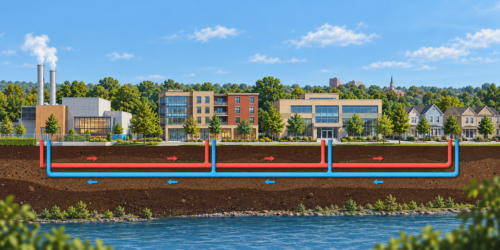
 Most buildings heat and cool each space independently using separate furnaces, boilers or air conditioning systems. While this approach has been the standard for decades, it can be energy intensive and often relies on fossil fuels.
Thermal energy networks offer a different way forward.
Rather than heating and cooling every building separately, these systems use a shared network of underground pipes to move water or another fluid between multiple buildings. Connected electric heat pumps transfer heat into or out of the network depending on each building’s needs, creating a highly efficient system that shares thermal energy across an entire neighborhood or campus.
One of the biggest advantages is that buildings rarely need heating and cooling at the same time. An office building filled with people and computers may generate excess heat while nearby apartments require heating. Instead of wasting that heat, a thermal energy network can capture it and deliver it where it’s needed. This continuous exchange reduces energy consumption and improves overall system efficiency.
Because these networks rely on electricity rather than on-site combustion, they can also help communities reduce greenhouse gas emissions and improve local air quality as the electric grid becomes cleaner over time.
Thermal energy networks offer additional benefits beyond sustainability. Shared infrastructure can improve long-term reliability, reduce maintenance costs and provide more stable heating and cooling for customers. They’re also well suited for new developments, universities, hospitals, downtown districts and neighborhoods looking to modernize aging energy infrastructure.
As New Jersey works to strengthen its energy system and reduce emissions, thermal energy networks represent an innovative solution that combines efficiency, resilience and long-term affordability. By sharing energy instead of producing it separately in every building, communities can lower costs while creating a cleaner, more flexible approach to heating and cooling.