By Nicole Miller and Barbara Blumenthal
Published by NJ.com |
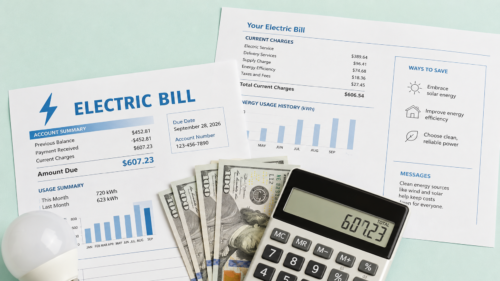 As New Jersey families open their monthly energy bills, many are experiencing sticker shock.
While electric bills have stabilized this summer through policies implemented by Gov. Mikie Sherrill’s administration to reduce costs over time, meaningful relief for households will take longer. The fastest way to lower electricity prices is to add more renewable energy.
Families deserve relief, but some are using this affordability crisis to revive a familiar talking point: an “all of the above” energy strategy.
What is often left unsaid is that such an approach typically means expanding fossil fuel infrastructure alongside renewable energy.
Renewable sources such as solar, wind and battery storage can help lower costs and strengthen the grid more quickly than many traditional energy projects.
The problem is that an “all of the above” strategy risks locking New Jersey into decades of volatile fossil fuel costs when cleaner, faster and increasingly affordable alternatives are already available.
The economics are increasingly difficult to ignore. While fossil fuel prices fluctuate with global supply and demand, renewable energy provides stable, locally generated electricity without ongoing fuel costs.
New Jersey is encouraging large-scale solar projects that can help increase supply and reduce pressure on electricity prices.
According to Lazard’s 2025 Levelized Cost of Energy 4analysis, utility-scale solar remains among the lowest-cost sources of new electricity generation, with costs substantially below those of natural gas peaker plants.
Homeowners can also lower their electric bills and realize relatively quick payback by investing in solar. At the statewide level, expanding renewable energy helps diversify the grid, stabilize prices and keep more energy dollars circulating in New Jersey’s economy while supporting thousands of good-paying jobs.
By comparison, many solar and wind projects can be developed more quickly, adding power to the grid sooner while reducing dependence on costly fossil fuels.
If the goal is to increase supply and ease pressure on electricity prices, clean energy offers one of the fastest paths forward.
New Jersey cannot control world events, but it can reduce its exposure to them. Expanding locally generated renewable energy gives the state greater control over its energy future while reducing dependence on fuel prices driven by international markets.
The cost of fossil fuels extends beyond monthly utility bills. Air pollution from burning fossil fuels carries significant public health consequences.
A 2024 Rutgers Climate Change Resource Center report estimated that reducing greenhouse gas emissions could save New Jersey between $13.3 billion and $30 billion in economic and public health costs while generating billions more in health benefits through 2035.
These health impacts represent costs that families ultimately pay through medical bills, missed work and reduced quality of life. Transitioning to cleaner energy can improve public health while lowering long-term economic costs.
State leaders have an opportunity to pursue an energy strategy centered on affordability, reliability and locally produced power.
As clean energy technologies become increasingly cost-competitive, accelerating investment in renewable energy can help diversify the state’s energy mix, reduce exposure to volatile fuel markets and create lasting savings for consumers.
New Jersey’s energy challenge requires solutions that lower costs, strengthen reliability and provide greater energy security.
Nicole Miller is principal of MnM Consulting and vice chair of the New Jersey Progressive Equitable Energy Coalition (NJPEEC).
Barbara Blumenthal, Ph.D., is an energy and environmental consultant and research coordinator for the New Jersey Conservation Foundation and ReThink Energy New Jersey.