 When we talk about the environmental impact of a natural gas pipeline, it’s important to look beyond the pipe itself.
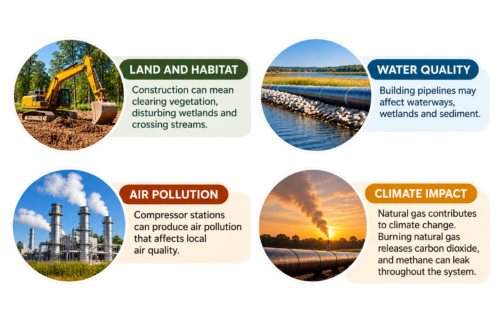
Construction can affect land and water. Building pipelines may mean clearing vegetation, disturbing wetlands, crossing streams or excavating sediment beneath waterways.
Compressor stations can affect air quality. These facilities are used to maintain pressure and keep natural gas moving through pipelines, and gas-fired compressor equipment can produce air pollution.
Natural gas contributes to climate change. Burning natural gas releases carbon dioxide, while methane — the primary component of natural gas — can escape throughout the production and delivery system. Methane is a powerful greenhouse gas.
And then there’s the question of how long this infrastructure will be with us.
Pipelines and compressor stations represent major investments intended to operate for many years. Building more fossil fuel infrastructure today can reinforce dependence on natural gas at the same time states like New Jersey are working toward a cleaner energy system.
That doesn’t mean energy demand disappears. Homes still need heating and cooling. Businesses need power. The electric grid needs to remain reliable.
The question is how we meet those needs.
Instead of assuming new fossil fuel infrastructure is the answer, we should be asking whether efficiency, electrification, renewable energy, energy storage and a more flexible electric grid can provide cleaner solutions.
Our energy choices should solve today’s challenges without creating tomorrow’s problems.