By: Pam Frank, CEO of ChargEVC, and Patty Cronheim, Program Director ReThink Energy NJ
Published by NJ Spotlight News
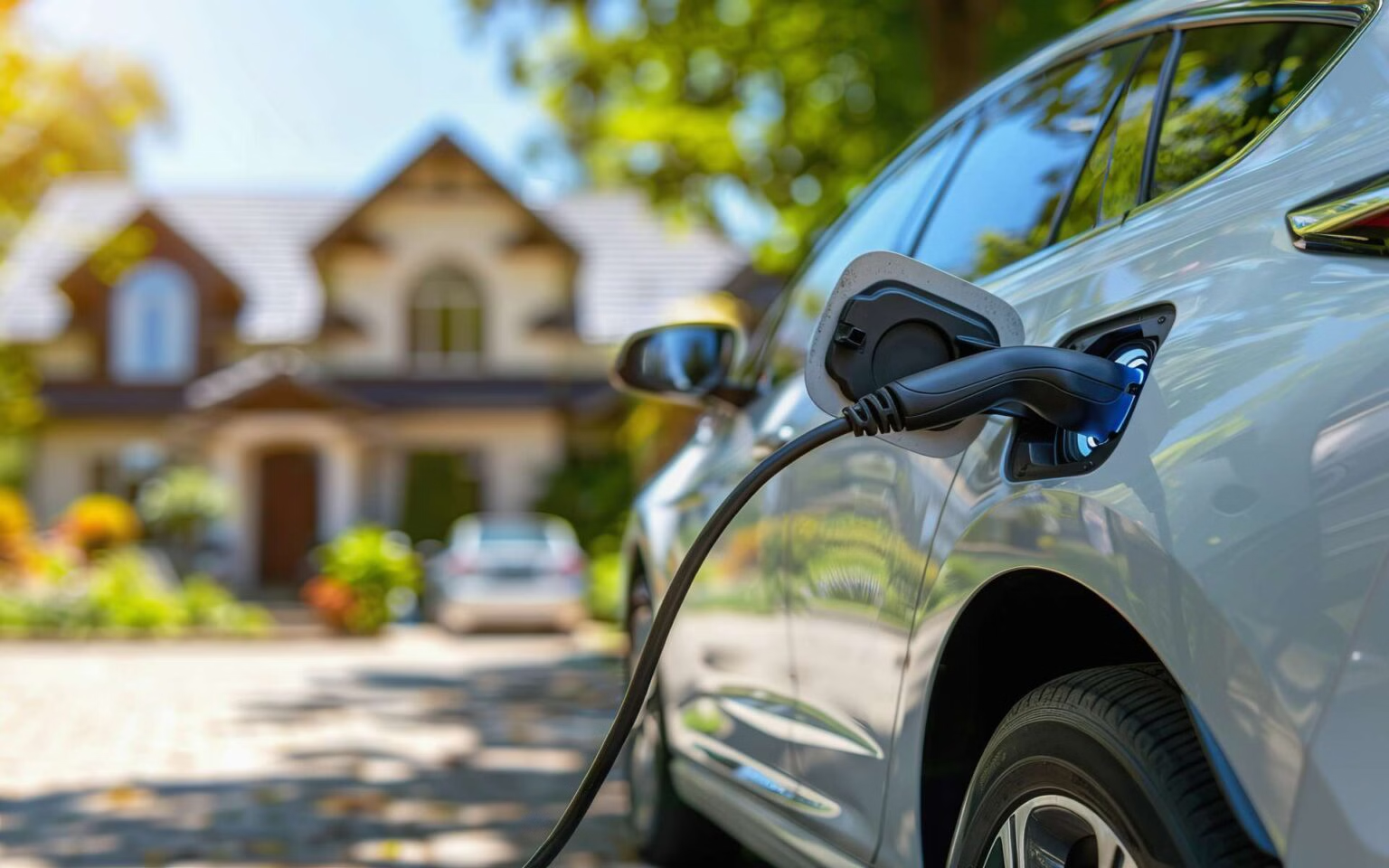
Energy policy stops feeling abstract when it affects your wallet, your commute or your health. Lately, you may be thinking about it a lot, especially when you open an electric bill or fill up at a gas station.
That’s why the debate over electric vehicles , or EVs, matters far beyond what kind of car someone drives.
For years, skeptics have portrayed EVs as expensive luxuries or unrealistic climate experiments. In New Jersey, though, EVs’ impacts are becoming practical: lower costs for electricity customers and EV drivers, a stronger grid and cleaner air.
The good news is that the transition to electric vehicles is well underway. It’s unknown, though, whether state policy will help residents benefit or keep unnecessary obstacles in the way.
New Jersey must stop undermining its clean transportation goals.
For years, the state led the nation with forward-thinking EV policies, including a sales tax exemption that helped make the vehicles more affordable. Lawmakers have increasingly undermined those gains by scaling back incentives and imposing one of the nation’s highest EV registration fees.
Let us explain.
Electricity costs spike during peak demand — sweltering summer afternoons and freezing winter nights. Utilities often meet those spikes with expensive and highly polluting natural gas “peaker plants.”
What if a partial replacement for those plants were parked right in your garage?
Cars sit most of the day. EV batteries store electricity and feed it back to homes or the grid during high demand. As more vehicles come onto the market with this capability, participating homes could effectively disappear from the grid during peak, lowering system strain, reducing wholesale electricity prices and cutting costs for ratepayers.
Utilities, instead of firing up fossil fuel infrastructure, could rely on the distributed energy sitting in driveways and garages across the state.
This technology is no longer theoretical. Some EVs power homes during outages, acting as backup generators. Combined with rooftop solar and battery storage, EVs can become part of larger virtual power plants.
Transitioning to EVs is far easier than critics suggest. Most New Jerseyans drive about 40 miles per day. An EV can handle the daily travel needs of many households while charging overnight with a standard outlet or Level 2 charger, operating via a 240-volt line like a clothes dryer. And unlike gasoline prices, electricity costs are generally more stable, predictable and lower.
A Level 2 charger provides roughly 25 miles of range per hour, meaning most drivers can start the day with a full battery with enough left to help meet their homes’ peak energy needs. The old idea that a car needs to deliver 400 miles on a single charge overlooks how people actually travel.
On long-distance drives, most people stop to stretch their legs or use the bathroom, which is often enough time to pick up enough charge to get them to their destination.
“Range anxiety” is fading as charging infrastructure expands. Trips that once seemed complicated for EV drivers are increasingly routine. A drive from Central Jersey to Washington, D.C., for example, is easily manageable with fast chargers along major roads. Newer EVs can access Tesla’s growing Supercharger network through adapters, while navigation apps make finding chargers as simple as locating a gas station.
Charging reliability and infrastructure need improvement, especially for residents in apartments or dense urban communities without overnight charging access. Those challenges are solvable — and no reason to cling to fossil fuel dependence.
Cities like Hoboken could expand curbside charging systems like those in Europe. Public charging stations at shopping centers or parking garages can make EV ownership practical for residents without driveways. These investments matter because nearly 40% of New Jersey residents live in multifamily or high-density housing.
This is about more than cars. It’s about whether New Jersey continues tying its economy and public health to volatile fossil fuel systems or accelerates toward cleaner, more affordable energy.
New Jersey has an opportunity to become a national leader in equitable EV access if policymakers are willing to follow through. The challenge is no longer technology. It’s political will and execution.