Credit: Building Decarbonization Coalition
Heat pumps and all-electric homes continue to gain momentum across the U.S., according to the Building Decarbonization Coalition’s (BDC) latest Momentum report, which highlights growing adoption of clean heating technologies alongside policy efforts to tackle rising energy costs.
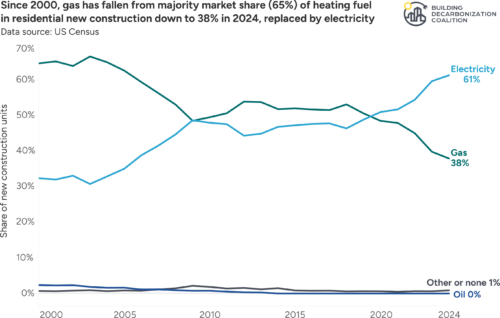
The report found that U.S. heat pump shipments outpaced fossil fuel furnace shipments by 32% during the first quarter of 2026, while coming within 2% of air conditioner shipments—another sign that heat pumps are becoming the default heating and cooling technology for many homeowners. Meanwhile, electric heating in new residential construction has now surpassed gas heating for five consecutive years, reaching a record 61% market share, compared to 38% for gas.
Beyond market trends, BDC points to a wave of regulatory and legislative activity aimed at improving energy affordability. States are advancing “Future of Gas” proceedings, reevaluating gas line extension allowances that often require existing customers to subsidize new gas hookups, and exploring neighborhood-scale thermal energy networks as cost-effective alternatives to expanding aging gas infrastructure.
Energy affordability is also emerging as a defining political issue heading into the 2026 midterm elections. With 36 gubernatorial races and 22 public utility commissioner seats on the ballot, utility costs are taking center stage as residential energy bills have increased by a median of roughly 17% across states since 2019. At the same time, gas and electric utilities are seeking more than $16 billion in rate increases from regulators nationwide.
State lawmakers are increasingly responding with affordability-focused building decarbonization policies. BDC is tracking 22 energy affordability bills across 12 states, including legislation to expand low-income energy assistance, weatherization programs, heat pump incentives, utility shutoff protections, consumer safeguards, and reforms to utility cost recovery.
The report also examines neighborhood-scale electrification case studies and other emerging policies shaping the transition to cleaner, more affordable buildings, underscoring how building decarbonization is increasingly being framed not only as a climate strategy, but also as a way to help protect households from rising energy costs.
Read the full report.